
Chris Harrington, managing director at travel transfer company hoppa, has outlined what to do to give yourself the best chance at recovering your valuables, or, at least, getting some compensation for the loss

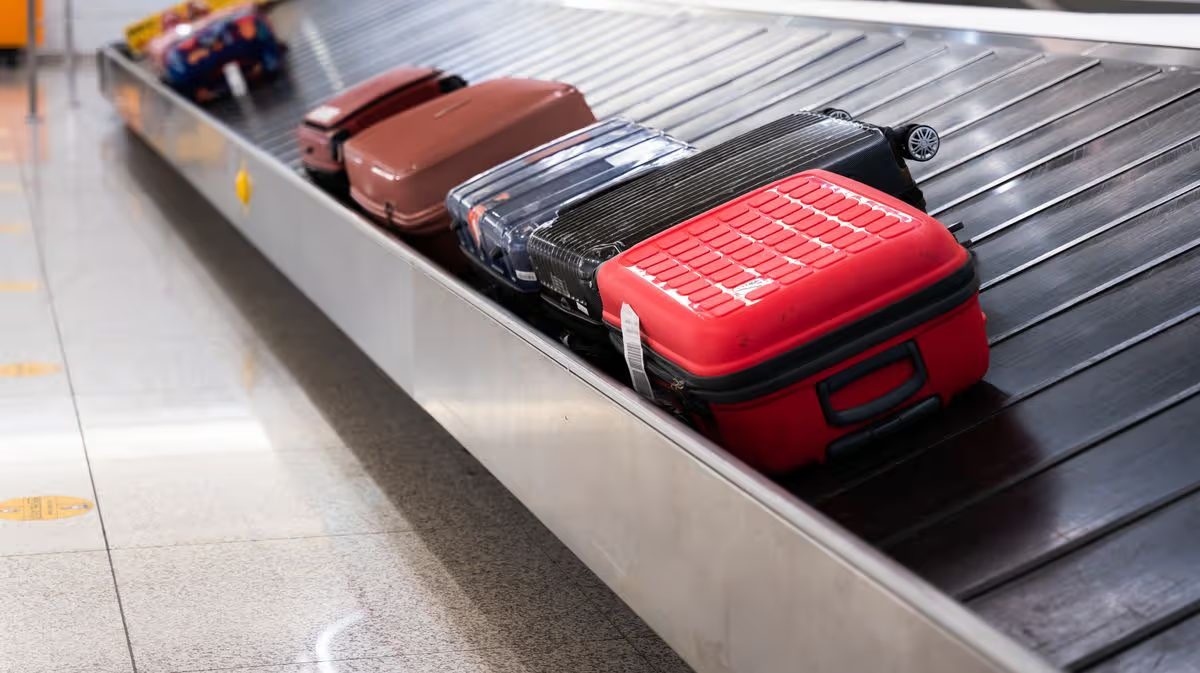
There are seven essential steps to take if your luggage is mishandled(Image: Getty)
One of the most common travel nightmare scenarios tourists face is having their luggage go missing after a flight.
Mishandling checked-in bags costs airlines around £4.2 billion a year, according to aviation technology company SITA. If you’re one of the unlucky ones who ends up not finding your suitcase on the conveyor belt, here are the seven steps to take immediately, according to an expert.
Chris Harrington, managing director at travel transfer company hoppa, has outlined what to do to give yourself the best chance at recovering your valuables, or, at least, getting some compensation for the loss.
The most important thing, he says, is to act fast. He says: “Ultimately, the faster and more informed your response is, the better your chances of recovering your bag or at least getting clear updates on where it is.”
Chris advises heading straight to the airline’s service desk near baggage reclaim if you notice a missing bag – stressing that delays can reduce the chances of locating your bag quickly.
READ MORE: Ryanair passengers warned over type of bag you can never check inREAD MORE: UK tourists face travel disruption on May 12 as new strike action confirmed
From then on, it’s important to have your baggage tag and flight details ready, as they will help staff begin tracking your suitcase straight away.
You should also be as specific as you can when describing the missing item. “Details matter. Think about the colour, size, brand, and any distinguishing features like stickers or tags. Even better, show photos if you have them,” Chris continued.
And once your case is all documented and reported, never forget to ask for a Property Irregularity Report, or PIR number, as it is “essential for tracking your luggage and for any future claims.”
In the meantime, most airlines try not to leave customers empty-handed. “Some carriers will provide an allowance for essentials like clothes and toiletries,” Chris notes. “If they don’t, keep every receipt, as you may be able to claim those costs back later.”
Another essential step is to contact insurance companies early on, since many policies include cover for delayed luggage after 12 to 24 hours, but the expert recommends being prepared and checking exactly what evidence they require. If, after several days, nothing is found, it’s crucial not to give up.
“You should be following up regularly,” Harrington advises, adding that “after 21 days, luggage is officially considered lost under international guidelines.”
Thats the stage in which travellers are encouraged to put forward a formal claim – according to the Montreal Convention, which sets out airline liability in such cases.
Chris highlights that passengers may then be entitled to compensation of up to around £1,300 if they provide the right documentation.
To claim that sum, “you’ll need proof of your luggage and what was inside it. The more evidence you have, the stronger your claim.”